A Forensic Expert’s Response To The Press Release From The Oyo State Police Command (Dated 8th August 2026) Regarding The Shooting Of Nurudeen Azeez
Ayodeji Aladejana · 16 August 2026
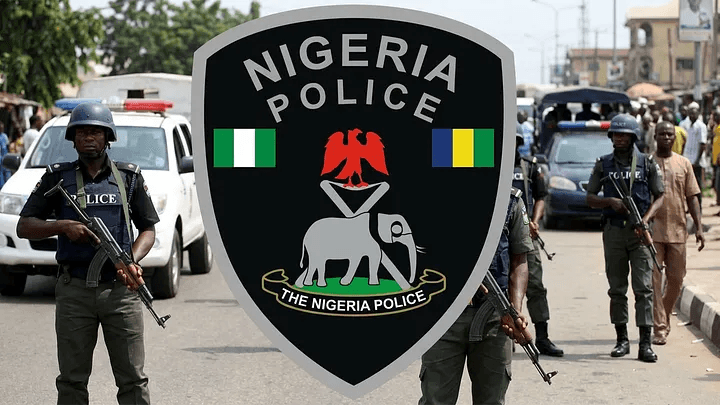
I read this “press release” a few minutes after it was published on the X (formerly known as Twitter) account of the Oyo State Police Command (@OyoPoliceNG). I didn’t react or respond right away because I expected the Police to sit with the press release, ponder it, and realise it does them or the victim no good. I had hoped that the post would be taken down, with some apologies to the victim and, of course, Nigerians. Now that the Police have refused to do the right thing, I believe it is my civic duty, as a trained forensic scientist, to point out the obvious holes in the purported forensic investigation conducted by the Oyo State Police Command regarding the shooting of Nurudeen Azeez.
The only undisputed fact is that on the night of 16th August 2021, Nurudeen Azeez was shot. Whatever the circumstances, some police officers were present in the immediate vicinity when that shooting occurred. On that fateful day, the Nigeria Police Force first failed in its primary constitutional duty to protect a citizen, Nurudeen Azeez, from armed attack. The Force then failed a second time with their inability to identify, apprehend, or prosecute whoever fired the weapon that put fifteen pellets into him. And now, through this press release, the Force is failing Nurudeen Azeez the third time by stripping the victim of his only remaining avenue to justice and closure by presenting a forensic investigation riddled with procedural gaps, evidentiary inconsistencies, and institutional conflicts of interest that cannot withstand independent expert scrutiny. That Nurudeen Azeez must now fight the very institution that failed to protect him, failed to catch his attacker, and conducted his investigation internally, is itself a statement about the condition of policing in Nigeria.
I have the training and qualifications, and I am familiar with both the theoretical framework and the standard operational procedures for forensic investigations. What I read in this press release does not meet those standards.
1. The pellets that were extracted from the victim, which, according to the press release, “were not consistent with AK-47 ammunition”, are not exculpatory evidence that exonerates the police. A standard forensic ballistic investigation would have identified the type of weapon from the morphology of the projectile, diameter, composition, and sometimes the rifling characteristics. Investigators would then do a comparative analysis to match the projectile to a specific weapon or weapon class.
This statement from the Oyo State Police Command did not indicate that this positive matching process was completed. The Police still need to confirm whether the pellets extracted from Nurudeen Azeez positively matched the locally fabricated pistol recovered at the scene. If they did, why is that finding not stated clearly? If they were not, why is the Police then trying to prove its innocence by resting on an incomplete evidentiary foundation?
2. The police, in that press release, claimed the victim’s brother, Nurudeen Musa, said that fifteen pellets were removed from the victim’s body. However, that same press release said thirteen pellets were documented, and six pellets were registered as exhibits. Under standard forensic evidence management protocols, every item of physical evidence recovered from a victim’s body in a shooting case must be individually documented, photographed, measured, weighed, packaged, and assigned a unique exhibit reference at the point of recovery. That same standard mandates that the number of items documented at the scene of recovery must match the number entered into the exhibit register.
The police need to explain whether the discrepancy of seven pellets between what a lay witness observed being removed and what the police formally documented is a failure of basic evidence handling or a poor attempt to cover up their involvement in the shooting. That discrepancy alone is a dent in the credibility of the forensic findings resulting from the exhibits that were registered.
3. The press release states that both AK-47 rifles were “subjected to forensic examination to determine whether they were connected to the shooting” and that the locally fabricated pistol “showed characteristics consistent with recent discharge.” However, the police did not mention whether gunshot residue analysis was conducted on the two officers present at the time of the shooting.
Gunshot residue (GSR) analysis is among the most immediate and time-sensitive forensic procedures conducted in a shooting investigation. Primer residue particles, primarily lead, barium, and antimony compounds in conventional ammunition, or their equivalents in locally fabricated ammunition, stick to the hands, face, and clothing of anyone who has recently discharged a firearm. GSR samples are usually collected as soon as possible after the incident, ideally within six hours, to preserve evidentiary integrity.
Since the police admit that the officers were present at the scene when the shooting happened, were GSR samples taken from their hands and clothing that night? If yes, why were the findings not mentioned in this press release? If they were not taken, that omission is a fundamental investigative failure that no subsequent ballistic finding can remedy. That alone is enough to call into question the training and qualification of the “forensic expert” who conducted the “forensic investigation” the police are claiming they conducted.
4. One major procedural flaw in this situation is that an investigation into whether two officers attached to the Oyo State Police Command shot Nurudeen Azeez was conducted by the Oyo State Police Command without any oversight or involvement of an independent body or representatives of the victim. This structural conflict of interest violates basic principles of investigative independence.
The police could have invited the National Human Rights Commission, the Nigerian Bar Association and the family of the victim to participate in or witness the investigation. None of these independent oversight mechanisms appear to have been engaged in this investigation. A forensic conclusion that exonerates police officers, produced by an investigation conducted entirely within the command structure of the police force being investigated, cannot be presented to the public as objective, independent, or final. It is, at best, an internal finding that requires independent verification before it can carry any evidentiary or moral weight.
5. The police, in that press release, admitted that when investigators first visited Nurudeen Azeez, he was still undergoing intensive care, and they were unable to take his statement. The statement does not say whether investigators ever formally recorded his statement. This means that an investigation into a shooting has been concluded, its findings published, and the victim, who is also the primary witness to his own shooting, has never had his account formally entered into the investigative record.
In any properly conducted criminal or administrative investigation, the complainant’s statement is foundational because it establishes the basis for the complaint, identifies the specific allegations to be investigated, and provides the evidentiary contrast against which forensic findings must be tested. Concluding an investigation without the complainant’s statement on the record is the equivalent of adjudicating a case without hearing from the claimant. No competent court, qualified forensic expert, or independent oversight institution would accept such a process as complete.
6. The press release stated that “information from eyewitnesses” at the scene indicated that a passenger on a motorcycle had been shot. These eyewitnesses are not named, their statements are not described in any detail, and the press release provides no indication of whether their accounts support or contradict the police narrative. The motorist who reportedly approached the officers to report being pursued by armed robbers, the person whose account triggered the entire sequence of events the police describe, is similarly unnamed and unverified. Standard investigative procedure requires that all witness statements be formally recorded, signed, and preserved in the case file. A press release that references eyewitness information without naming witnesses, quoting their accounts, or confirming that their statements are available for independent review is trying to cover up the truth, not present evidence.
7. For the record, and in the interest of the victim’s right to justice, an independent investigation that meets the minimum forensic standards would require an independent GSR analysis of the hands of the officers present at the scene, their uniforms, and standard-issued firearm (or whatever firearm they were patrolling with on that fateful day). The analysis should, however, have been conducted within the preservation window on the night of the incident, or an explanation provided as to why it was not. Such an investigation would also conduct a full ballistic comparison to establish a positive match between the extracted pellets and the recovered locally fabricated pistol, an independent forensic verification of the rifle examination findings by a laboratory not affiliated with the Nigeria Police Force. The investigation would also include a formal statement from Nurudeen Azeez recorded at his earliest opportunity to provide one, formal statements from named eyewitnesses available for independent review, a complete and auditable chain of custody for all fifteen pellets from extraction to exhibit registration, and oversight of the entire process by an independent body such as the National Human Rights Commission, a court-appointed forensic officer, the Nigerian Bar Association and the family of the victim.
8. It was not just the Oyo State Police Command that failed Nurudeen Azeez, the Oyo State Government failed him too. The Oyo State Government enacted the Oyo State Coroners’ Law in 2018, making Oyo State one of the few states in Nigeria to enact such legislation, alongside Lagos State, which passed its own Coroners System Law in 2007. The Oyo State Coroners’ Law 2018 established a framework for independent judicial inquiry into deaths occurring under suspicious, violent, or unnatural circumstances, and mandated a structured forensic death investigation process under the oversight of a coroner operating independently of the police. However, the Oyo State Coroners’ Law 2018 is still substantially unimplemented several years after it was enacted. The State Government is yet to appoint a Chief Coroner, and the office, which was created by the Oyo State Coroners’ Law 2018, has never been operationally active. The government has not appropriated any funds to the office, and the office has not ordered any coroner’s inquests to be conducted into any of the high-profile suspicious death cases that have occurred in Oyo State during this period.
The shooting of Nurudeen Azeez on 16th August 2021, which is the subject of this response, involved a gunshot injury under disputed circumstances with police officers present at the scene, exactly the category of case that a coroner’s inquest is designed to address independently of the police investigation. In May 2025, a police officer shot and killed a teenager inside a vehicle during a joint OYRTMA-Police traffic enforcement operation in Ibadan, allegedly while aiming at the vehicle’s tyre. That teenager’s family received no independent judicial inquiry into the circumstances of the death, because no coroner’s system exists in operational terms to compel one.
If the Oyo State Government had implemented the Oyo State Coroners’ Law 2018, the coroner, operating as a judicial officer independent of the police and the executive, would have the power to summon witnesses, compel the production of forensic evidence, examine ballistic reports independently, and produce findings that are placed on the public record. None of this happened in Nurudeen Azeez’s case or in the May 2025 teenager’s case. Unfortunately, the law that would have required it to happen exists only on paper since 2018. The political will to give it operational life, to make the appointments, pass the enabling appropriations, and establish the institutional infrastructure, has not materialised across two administrations. Nurudeen Azeez is therefore not only a victim of the police officers who were present when he was shot, but also a victim of the internal investigation that cleared those officers without independent forensic verification. He is also a victim of a government that enacted a law capable of delivering justice and then failed to do so.
Finally, the press release from the Oyo State Police Command urged the public to “exercise caution when reporting or sharing allegations, particularly where the findings of a concluded investigation are available.”
I would, however, urge the same caution in the opposite direction. The public should exercise equal caution before accepting the conclusions of an investigation that was riddled with procedural flaws and structural conflicts of interest. Nurudeen Azeez was shot, and he deserves an answer about who shot him.
The erosion of public trust in the Nigeria Police Force is not, as the Force sometimes implies, a product of public irrationality or social media hysteria. It is the rational and proportionate response of a public that has learned, repeatedly, that institutional investigations into police conduct produce institutional conclusions. Nurudeen Azeez deserves better, and Nigerians deserve better, too.
Comments
No comments yet.